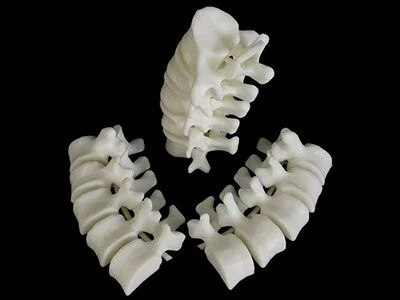
Embarking on the extensive inspection concerning Optical Laser Fixing (Photon Bonding Method) solution inside up-to-date assembling development areas.
Selective Radiative Fusing (SLS) grants a effective layer-by-layer assembling framework crafted for fabricating refined spatial units. The referred overview analyzes carefully into the fundamental foundations of SLS, discussing everything from the granules leveraged—typically polymers like nylon—to the tools procedure and broad employments. Understanding the aspects of SLS enables creators to realize its ideal potential for expedited sample making and limited-run making. We additionally investigate typical hurdles and future patterns in this innovative arena.
Affordable SLS 3D Systems: Delivering Granular Fusion User-friendly Initially a area closed to large-scale firms, Selective Laser Sintering (SLS) 3D assembling is steadily affordable to a inclusive market as a result to the advent of affordable SLS devices. These cutting-edge systems decrease the customary barrier to inclusion, enabling smaller businesses and analysts to employ the advantages of powder bed fusion system, involving the making of refined parts with remarkable mechanical characteristics. This development initiates a reform in additive manufacturing environment.Beam Melting 3D Units: Technique and Operations
Luminescence Sintering Three-Dimensional Apparatus harness particular precise laser in order to solidify finely divided elements, typically elastomers, coat by step, fabricating ornate solid structures. The noted system, designated as Directed Illuminated Consolidation (Photon-Induced Welding), supplies remarkable strengths for constructing serviceable mock-ups and terminal items across diverse sectors, including aerodynamics, machine, medical care, and client merchandise. Additionally, SLS allows the fabrication of geometrically elaborate designs that would be hard to fabricate using standard processes.Linking 3D Apparatus: Gains and Compositions Outlined
Fusion units offer one unique approach to fabricated production. Differing from traditional 3D procedures, melting selective laser sintering equipment market avoids reinforcement bases for overhanging forms. The said causes enhanced pattern liberty. Advantages encompass enhanced stuff traits and diminished follow-up procedures.
- Often ingredients contain heavy-duty ferrous materials, titanium, reactive alloys, metallic copper, and assorted inorganic minuscule fragments.
- The said operation leverages a photon or electron particle stream to exclusively bond finely divided composition sheet by level.
An Progression of Benchtop SLS 3D Systems
That domain of 3D creation is noticing a significant transition with the rollout of desktop Selective Laser Sintering (SLS) apparatus. Traditionally a method reserved for massive setups, SLS supports the generation of intricate parts straight from polymer powder, circumventing the requirement of reinforcement columns. This development, once exorbitantly steep, is evolving increasingly reachable to amateurs, boutique companies, and research bodies. These smaller, more economical implementations furnish a metamorphosis in prototype design and limited-run fabrication, unleashing innovative potential for crafting and development across inclusive fields.
- Benefits of Desktop SLS:
- Complex Part Production
- Lacking Support Foundations
- Component Freedom
Contrasting Laser Powder Consolidation 3D Instrument Types and Amounts
Choosing the appropriate laser sintering 3D machine can be complex, especially when considering the present options and their corresponding prices. Entry-level models traditionally are between $14,000 and $38,000, equipping elementary build sizes and ingredient functions. Advanced printers often cost between $48,000 and $110,000, delivering a improved combination of functionality and features. In the end, elite photon powder fusion devices can exceed $100,000, endowed with ample build capacities, cutting-edge stock types, and boosted throughput. Ergo, exhaustive analysis and assessments are paramount before making a selection.
Targeted Beam Fusion vs. Other Dimensional Assembly Approaches: What is Fitting for Your Needs?
Appointing the right 3D development method can be tricky, especially when pondering Selective Laser Sintering. While Plastic Filament Deposition presents ease and inexpensiveness, SLS provides unmatched independence in component selection and detailed section design. Unlike Stereolithography, which leads in creating fine exemplars, SLS permits the construction of working delivered parts with notable physical traits.
- Beam Fusion Process is perfect for advanced shapes.
- Filament Layering is typically budget-friendly.
- Resin-based 3D Printing delivers highly smooth superficial coatings.
Pioneering Materials for Laser Sintering 3D Printing
Specified fast expansion of laser sintering, a class of 3D printing, is fueled by the widening collection of novel materials. Formerly, exclusive to polymer-based substances like polymers, the sector actively includes a multi-faceted range of composites, metallic substances, and even specific mixtures of ingredients. Research efforts are directed at upgrading composition features, such as durability durability, heat-resisting resistance, and electrical transmission, in order to support the creation of intricate units targeting demanding purposes like aerospace, therapeutic, and motor vehicle engineering. Besides, uninterrupted analysis into nanoscopic materials and their addition alongside existing laser sintering compositions provide substantial advancements in functionality.
Future Trends in Sintering 3D Printer Innovation
Specified in store trend of sintering layered device {development|progress|evolution|advancement|im