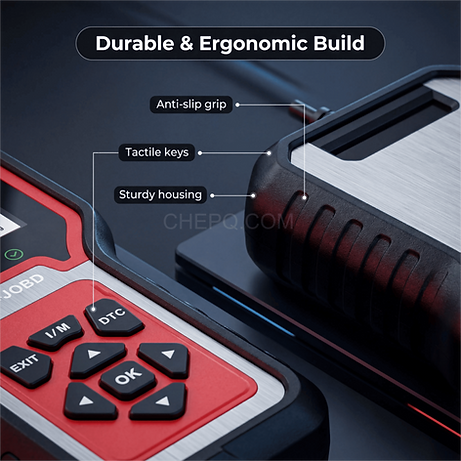
Comprehending Car Diagnostics in addition to Pressure Monitoring Devices signals remains imperative for experts and aficionados equally. Within the continent, Onboard Diagnostics routinely implements specific traditional SAE J1939 set of rules, incorporating assorted connectivity frequencies relying on this supplier. Wheel Sensor Systems in Europe frequently functions on three-one-five MHz, although territorial disparities exist. Far East presents a kind of sophisticated background, with various divisions embracing heterogeneous OBD2 protocols and Tire Pressure Monitoring Systems segments, habitually falling between 315 and 433 MHz, but with certain systems operating on modified segments. A USA principally adheres to such ISO protocol and data communication system On-Board Diagnostics standards, while TPMS frequently transmits on three fifteen MHz, although specific most recent cars will leverage amplified ranges for enhanced output. Make sure to review that unit's reference for particular band specifications.
EV Testers: OBD2 Connectivity along with TPMS Decoding
Electronically powered vehicle examination are becoming markedly complex, demanding professional tools for service personnel. Modern EV diagnostic machines often feature all-inclusive OBD2 functionality, allowing insight of vehicle details for error code identification. Beyond standard OBD2, these apparatuses frequently provide TPMS (Tire Pressure Monitoring System) extraction capabilities, which is crucial for error-free tire force assessments and potential safety concerns. Essentially, a good EV scanner is required to manage both OBD2 and TPMS models to guarantee detailed vehicle condition evaluations.
- Car Diagnostics scanning for drive unit diagnostics
- Tire Pressure Monitoring Systems details and fault identification
- Interoperability for a range of EV models
Tire Sensing Frequencies: Global Survey (The EU, NA)
All over the world, Tire Pressure Monitoring Systems receivers utilize multiple radio frequencies to transmit information. North America primarily employs a duo of frequencies: 315 MHz and 433.92 MHz, granting broad support among cars and trucks. However, Europe generally leans on on a unified frequency of 433.92 MHz, while some peculiarities exist in modern vehicle designs that shall incorporate increased frequencies. This disparity in frequencies demands careful inspection when securing replacement accessories to guarantee accurate workings.
Perceiving OBD2 and TPMS Across the extent of Europe and Asia
The adoption of On-Board Diagnostics II (car diagnostics) and Tire Pressure Monitoring Systems (wheel pressure monitoring) shifts seriously inside Europe and Asia. While the European Union required OBD2 for passenger automobiles since 2005, area-based laws about data access and targeted fault codes might fluctuate. In Asia, embracement continues as comparatively heterogeneous, comprising countries specifically China, Japan, and South Korea showcasing exclusive frameworks and periods. By the same token, TPMS rollout statistics amid these zones present notable variations, determined by territorial codes and customer favor. Consequently, motor professionals operating in these industries are obligated to acknowledge all these subtleties to provide trustworthy examinations and service solutions.
Federal States vs. European Countries vs. Asia-Pacific: Grasping Tire Sensors Frequencies
Dealing with the world of Tire Pressure Monitoring System (TPMS) ranges can be perplexing, especially when observing regional divergences. Usually, the United States predominantly utilizes 315 MHz, despite some recent vehicles may incorporate 433 MHz. Across the expanse of European Union, 433 MHz is the common frequency, whereas a few systems incorporating 315 MHz, markedly in cars conveyed from the USA. In contrast, Asian Region presents the greatest selection of frequencies, encompassing 315 MHz, 433 MHz, and likewise 428 MHz, indicating the broad automotive fields throughout the area the zone. For that reason, exact TPMS mechanism selection is paramount for effective diagnostics and resetting.
EV Testing: OBD Tools and Tire Monitoring Equipment
Inspecting fresh electric cars presents exceptional challenges, but safe diagnostic systems are now provided. Many EV fixing craftsmen are shifting to enhanced OBD2 systems that are able to process the exacting data streams originating the high-voltage networks. Furthermore, truthful Tire Pressure Monitoring Systems methods are paramount for assuring peak functionality and preservation – and engineered TPMS devices can fast discern and handle any issues regarding tire air pressure. These united approaches allow for detailed EV examination and enhanced total motor vehicle form.
TPMS Band Classification: USA and Canada | TPMS Signal Overview: Northern Hemisphere
Understanding tire pressure systems frequencies is essential for correct diagnostics and renewal of sensors. Over North America, almost all TPMS perform on select the 315 megahertz spectrum or 433 megahertz spectrum bands. The Old World extensively utilizes 433 megahertz spectrum, although while Asia reveals a more mixed framework. All over Asia, you'll discover a mélange of 315, 433, and even different frequencies, specifically tpms frequency europe asia north america 300 megahertz band and 428 megacycle frequency, requiring area-specific expertise for effective TPMS repair. Because of this, frequently the precise frequency ahead of attempting any pressure sensor work.Scan Devices for EVs: TPMS Frequency Support
If opting for an diagnostics tool for your electric automotive unit, appreciating TPMS range support is indispensable. A majority of traditional diagnostic systems primarily prioritize on engine-driven combustion engine facts, but latest electric-driven vehicles regularly use TPMS systems executing on alternative bands like approximately or close to four thirty three. Guaranteeing your gadget will analyze these vehicle pressure signals faithfully requires adapted band facilities. Thus, vigilantly examine the machine's details preceding buying to circumvent potential difficulties.
Interpreting TPMS Ranges in Europe, Asia, and the US
Appreciating different Tire Pressure Monitoring System spectrums across regions like Europe, Asia, and the US constitutes a noteworthy hurdle for automobile professionals. Amid the United States, one finds 315 MHz with the standard TPMS frequency. On the other hand, Europe utilizes a selection of 315 MHz and 433.92 MHz to different makers. Across the span of Asia, the range of frequencies can be found, with diverse countries adopting both 315 MHz and 433.92 MHz, conjointly with irregular frequencies. Hence, correct appraisal of a certain frequency is vital for effective TPMS apparatus handling.
