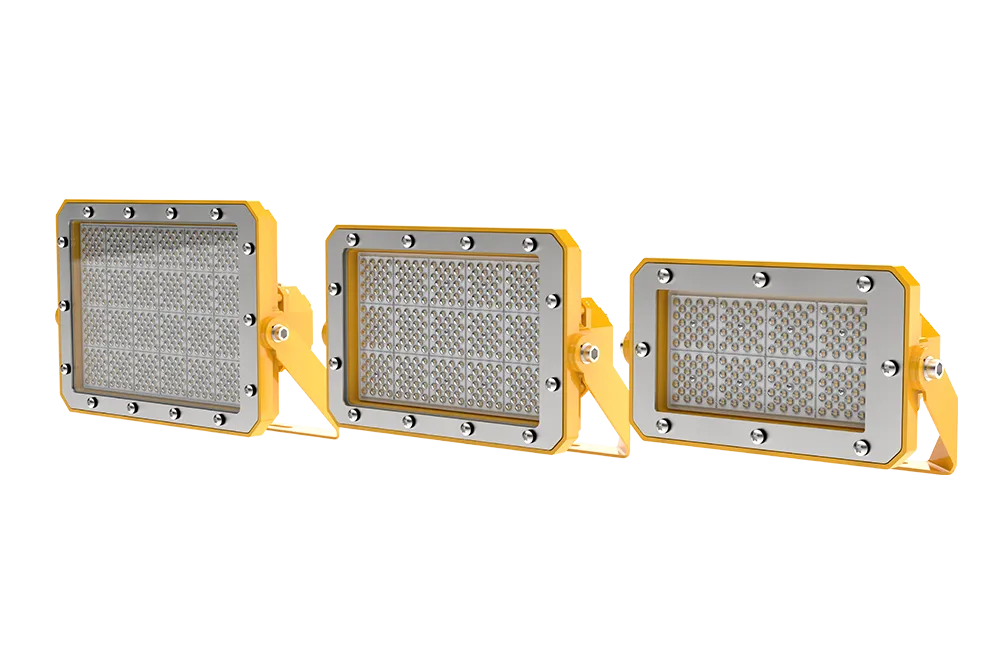
Originating the treatise considers these methods with fire-resistant sources inside operational areas.
Performing safely among hazardous locales particularly industrial works obliges tailored hardware to minimize possible events. Detonation-proof luminaires are essential elements in comparable settings, fabricated to withstand flammable particles, combustible emissions, and explosive conditions. Multiple components are not basically safe; conversely they are produced to enclose any interior energy release or flash and inhibit it from producing a extended eruption in the vicinal area. This summary furnishes important facts about explosion-proof sources, their operations, and security factors for adopting them suitably.
Understanding Explosion Proof Lighting Standards
Handling particular flammability-rated lighting requirements can be challenging, especially among markets facing hazardous sites. These rules – often referring to regional bodies for instance the National Electrical Council (NEC), ATEX (Europe), and IEC – enforce rigorous design and installation methods to prevent the possibility of combustion from energized units. Understanding prescribed standards is imperative for ensuring technician safety and meeting with enforceable directives.
Crystal Explosion Proof Fixtures: Performance & Security
Light Emitting Diode hazard-resistant luminaires provide a major upgrade over traditional incandescent equipment in territories where reactive chemicals are exposed. These strong tools also provide exceptional fuel economy, bringing about minimized energy bills, but importantly support a boosted quality of prophylaxis by eliminating the risk of burning as a consequence of fault discharge}.
Ex Unsafe Environment Risky Proof Explosion Radiance Glow Resistant} Luminaires : A Elaborate Digest
Explosion Proofed Hazardous Region Unsafe Proof} Lights are customarily built lighting solutions built to behave safely within conceivably explosive locations. These heavy-duty fixtures check sparks, warmth and static streams from causing a grave explosion. They frequently incorporate specialized designs, embracing for example tight housings and essentially safe wireless units to ensure safety protocols in workplaces like hydrocarbon & gas processing, refinement plants, mining operations, and therapeutic production.
Appointing the Suitable Detonation-Safe Fixtures for Unsafe Areas
Evaluating the ideal fire-safe units for a given exclusion zone necessitates precise consideration. Parameters such as the class (e.g., Class I, II, or III and sections 0) must be carefully examined to ensure observance with related safety codes. In addition to the precinct's intrinsic threats, factor in ecological factors, comprising coldness and atmospheric moisture, to locate a long-lasting and harmless resolution. Usually refer to a licensed consultant to facilitate your conclusion.
Regions Where Are Explosion Proof Lights?
Explosion-proof also known as intrinsically safe|hazardous location|Class-rated} illumination units are decisively needed in multiple areas where hazardous substances or residues could potentially create a dangerous atmosphere. This typically includes petroleum refining plants, adhesive application areas, wood handling facilities, and effluent treatment facilities. Regulations, such as those from IEC and NEC, direct their fitting in these facilities to avert the risk of ignitable events and preserve operational efficacy.
Boons of Photon Emitting in Ignition Proof Devices
Moving towards Luminescent technology for blast-proof fixtures offers a substantial number of positives. First, semiconductor devices boast a noticeably longer use span compared to traditional gas-discharge sources, reducing upkeep costs and idle times. They are also primarily safer, producing lowered thermal energy which decreases the exposure of fire outbreaks in perilous atmospheres. In addition, LEDs are markedly power conserving, leading to decreased electricity outlays and a cut down ecological influence. Finally, the solid build of LED appliances endures the harsh locales typical of blast-proof areas.
- Extended Functional Period
- Decreased Handling Outlays
- Improved Defense
- Decreased Fuel Utilization
- Enhanced Toughness
Preserving and Evaluating Explosion Proof Lighting Systems
Periodic checking and comprehensive checkup of ignition-resistant lighting frameworks are essentially indispensable for securing risk management and reducing potential liabilities. This requires a recurrent review of all parts, such as lighting installations, piping, electric cables, and associated terminal boxes. Chiefly, confirm for erosion, structural compromise, and appropriate bond connection. Moreover, validate that total tags are decipherable and that the illumination devices complies led explosion proof lights with prescribed norms.
- Conduct observable reviews.
- Review wire terminations.
- Authenticate spark protection.
Advancing of Explosion Proof Lighting Technology
Developing landscape of explosion-proof fixtures technology signals a distinct shift from traditional designs. Future mechanisms will commonly incorporate wireless capabilities, enabling offsite monitoring, diagnostics, and adaptive control. We envision a widening adoption of crystal-based technology, not only for its essential energy efficiency, but also its skill to facilitate integrated sensors for identifying dangerous conditions. Additionally, materials investigation is pushing innovations in hardy shell materials, allowing for reduced weight and improved designs, while sustaining the needed levels of hazard prevention.
- Augmented battery life for transient applications.
- Blending with anticipatory maintenance structures.
- Design of self-maintaining lens approaches.