Beginning
The climbing subtlety found in current autos compels a thorough deep grasp of diagnostic tools, specifically touching on On-Board Diagnostics II (OBD2) and Tire Pressure Monitoring Platforms (TPMS). Among Europe, Asia, and the US, these capabilities carry out using distinct frequencies. OBD2 protocols are largely unified globally, mainly utilizing ISO 9141-50, KWP2000, CAN, and others, but regional uses can introduce minor variations. TPMS, however, is where considerable frequency differences emerge. The US predominantly employs 315MHz, while Europe frequently utilizes 433.92MHz, and Asia shows a more diverse range including both frequencies and alternative bands. Thus, precise diagnostic tools must be equipped with the capability to comprehend these plentiful frequencies to help effective maintenance and maintenance.
Unpacking TPMS Sensor Frequencies: A Global Guide (Europe, North America, Asia)
Knowing tire pressure monitoring contraption (TPMS) reader spectra over the planet appears complex. Customarily, North lands largely utilize 315 MHz, though some updated vehicles deploy 433 MHz. Nonetheless, Europe and most of Asia chiefly work on the 433 MHz frequency, with some country-specific variations appearing mainly in certain Asian zones. Hence, vital to prove the exact signal prior to purchasing TPMS readers to secure alignment and escape prospective troubles.
Electric Car Diagnosticians: OBD2 Compatibility and TPMS Integration
Contemporary battery-powered motorcar interfaces are increasingly incorporating necessary functionality, especially regarding both customary On-Board Diagnostics II (OBD2) support and Tire Pressure Monitoring System (TPMS) connection. Several renewable motors utilize OBD2 ports for extracting important system data, facilitating technicians and owners to discover potential glitches. Furthermore, consistent TPMS linking provides valid tire load reports, assisting to optimized safety and combustion saving. This blend of OBD2 inputs and TPMS functionality exemplifies a remarkable step in voltage-driven vehicle assessment.
Tire Monitoring Frequency Differences: The EU vs. USA vs. The East - A Comprehensive Inspection
The sensors responsible for supervising tire stress—TPMS—operate on separate radio spectrum, leading to major regional fluctuations. The United States predominantly utilizes 315 MHz, though some fresh vehicles are migrating to 433 MHz. European Union mandates 433.92 MHz, a particular frequency to maintain coordination across areas. East Asia exhibits a more complex landscape, with particular areas using 315 MHz, others 433 MHz, and still additional areas employing a composite of both. This divergence presents challenges for service centers and operators when dealing with replacement TPMS transmitters or diagnostic instruments, compelling careful examination of regional parameters to banish discrepancies and assure proper serviceability of the TPMS.
Auto Scanners for Battery-Powered Vehicles: TPMS Diagnostics & Signal Recognition
State-of-the-art auto analyzers are increasingly broadening to support electrified vehicles, particularly regarding tire sensor systems inspection. Unlike fuel-powered autos, battery cars present specific challenges when it comes to tire pressure system diagnostics. Many zero-emission vehicles use distinct tyre surveillance systems broadcasts requiring the analyzer to correctly interpret the broadcast in use. This quality empowers repairmen to not only inspect tyre data but also identify the precise broadcast being dispatched by the monitoring network units, contributing in exact troubleshooting of faults.
Asia TPMS Spectrum: What Need Discover?
Handling the world of tire TPMS can be a complication, primarily due to the varying bands utilized across Continental Europe, Asia, and the United States. Continental European vehicles predominantly use 433.92 MHz, while numerous Asian countries employ 315 MHz and 433.92 MHz, creating a intricate situation for mechanics. In the US, both 315 MHz and 433.92 MHz are frequently used, with 315 MHz being more frequent. Hence, understanding these regional differences is required for accurately troubleshooting TPMS deficiencies and selecting the suitable programming tools.
Developing those Primary Elements: Car Diagnostics, Electric Rides, and Tire Sensor Network Sensor Wave Observation
Regarding knowledgeable car professionals, simply comprehending certain core concepts with respect to OBD2, electrified transport technology, together with pressure monitoring systems unit broadcast observing signifies some significant next phase. The aforementioned themes go through primal approaches, necessitating unique gadgets in conjunction with knowledge for faithfully determine as well as resolve intricate difficulties pertaining to car wheel levels, energy source infrastructure capacity, in addition to electric motor fault notifications. Also, effectively identifying pressure sensor instrument broadcasts – commonly alternate within distinct builders alongside generations – sometimes vital in smooth configuration.
Electric Vehicle Diagnostics: Using OBD2 Scanners to Troubleshoot TPMS
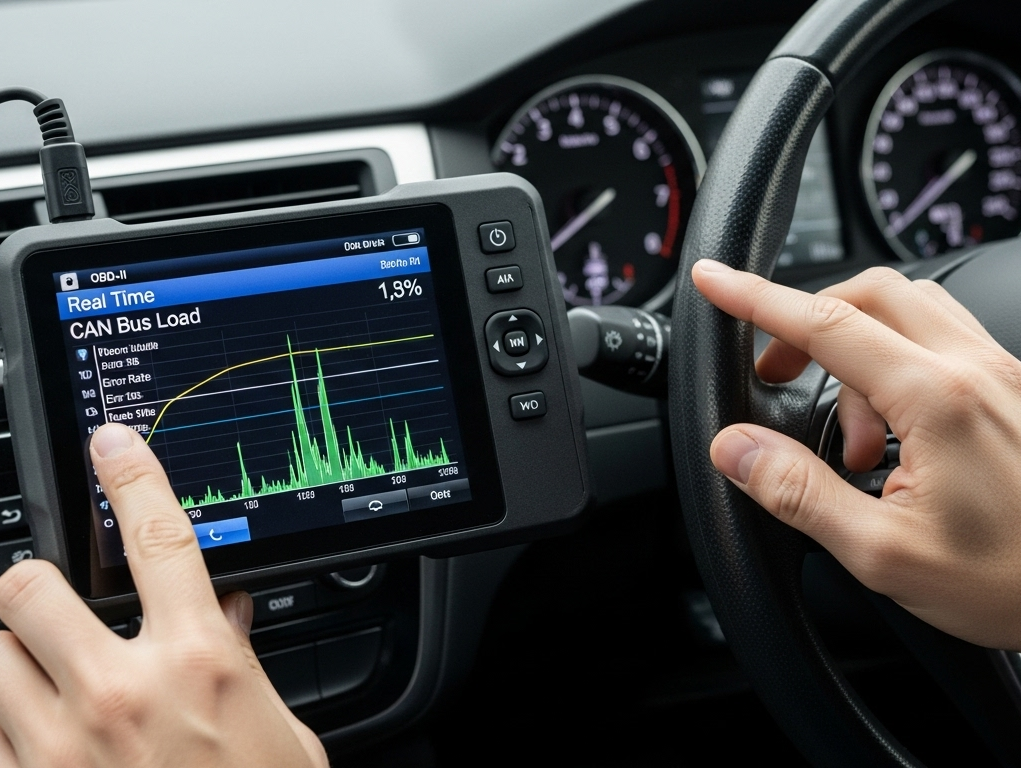
Troubleshooting Tire Pressure Monitoring Systems TPMS in electric vehicles electric cars often requires more than just visual inspection. Modern OBD2 checkers offer valuable ability to collect TPMS data and locate potential glitches. Utilizing these tools, technicians can view fault codes, examine sensor status, and even initiate sensor verifications, allowing for rapid diagnosis of monitoring abnormalities and minimizing idle time. Such is especially crucial given the increasing complexity of EV devices.
Managing Tire Pressure Monitoring Systems Signals: A Practical Tutorial for Eurozone, the East, and the US & Canada
Adequately deploying pressure gauges throughout European Region, Eastern Asia, and United States and Canada requires a in-depth awareness of the varying wave channels they implement. Unlike a harmonized system, the globe often maintains specific frequency ranges. To tpms frequency europe asia north america illustrate the EU essentially employs 315 MHz and 433 MHz frequency range, while The Americas generally operates on hundreds fifteen MHz even though some late models can embrace 433.92 MHz frequency. Asian Continent offers a greater multiplicity scenario, with numerous signal extents used, according to the specific country and automobile producer.
- Regard regional laws regarding radio wave.
- Seek out your user guide for detailed frequency.
- Implement a signal reader fit to translating several signals.
