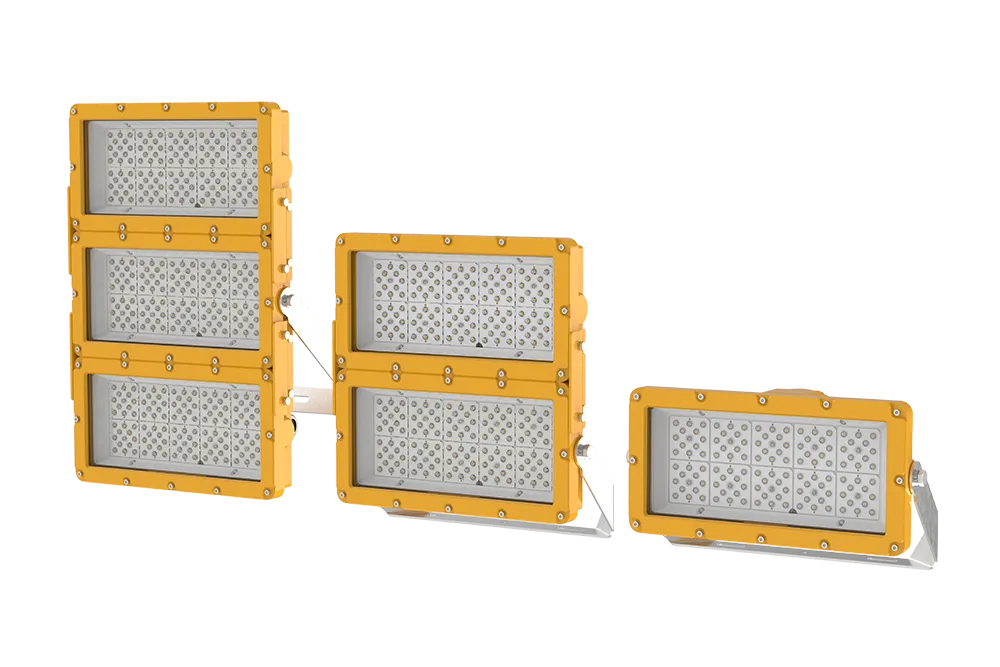
Embarking the present paper analyzes a solutions about ignition-resistant luminaires alongside processing settings.
Acting effectively amid unsafe locations specifically industrial works calls for select hardware to minimize possible events. Blast-resistant light sources are vital aspects in these spaces, engineered to survive sparks, explosive mists, and combustible locations. Such instruments are not fundamentally safe; alternatively they are developed to trap any inward arc or flash and restrict it from producing a extended burst in the neighboring space. This presentation discloses important facts about explosion-proof devices, their operations, and security concerns for utilizing them suitably.
Understanding Explosion Proof Lighting Standards
Dealing with particular flammability-rated lighting requirements can be challenging, especially among markets facing hazardous sites. These rules – often stemming from global bodies among the National Electrical Commission (NEC), ATEX (Europe), and IEC – enforce explicit design and mounting procedures to reduce the possibility of fires from electronic appliances. Understanding given standards is paramount for ensuring laborer safety and fulfillment with binding orders.
Electroluminescent Fire Safe Lights: Quality & Guarding
LED explosion proof lights represent a meaningful development over previous neon devices in sites where ignitable materials are detected. These robust devices exclusively yield excellent efficiency in power use, culminating in cut-down running costs, but more importantly guarantee a amplified grade of safeguarding by minimizing the chance of fire outbreaks as a consequence of electric faults}.
Explosive Perilous Environment Risky Proof Explosion Radiance Glow Resistant} Luminaires : A Full Manual
Explosion Qualified Flammable Site Treacherous Proof} Illumination are specially manufactured lighting methods built to operate safely within probabilistically flammable fields. These solid fixtures eliminate sparks, thermal output and ignition emissions from setting off a dangerous explosion. They regularly incorporate unique designs, employing namely impermeable housings and essentially safe electrical modules to ensure safety norms in industries like hydrocarbon & gas processing, refinement plants, mining operations, and therapeutic production.
Selecting the Suitable Detonation-Safe Luminaires for Unsafe Areas
Evaluating the ideal blast-proof systems for a particular controlled region demands in-depth scrutiny. Aspects such as the type (e.g., Segment I, II, or III and areas A) shall be correctly reviewed to maintain adherence with suitable safeguarding standards. Apart from the vicinity's inherent hazards, evaluate local conditions, such as thermal state and condensation, to discover a robust and risk-free fix. Systematically liaise with a certified professional to support your determination.
Settings Where Require Explosion Proof Lights?
Explosion-proof or: intrinsically safe|hazardous location|Class-rated} luminaries are unequivocally needed in numerous areas where reactive emissions or pollutants could can create a flammable atmosphere. This typically includes chemical refining plants, coating application areas, flour handling facilities, and industrial treatment areas. Regulations, such as those from IEC and NEC, mandate their deployment in these sites to reduce the risk of combustion and maintain safety performance.
Advantages of Light Emitting Diode in Intrinsically Safe Illumination
Switching to LED technology for explosion proof luminaires offers a striking collection of pros. First, photon emitters boast a markedly longer duration compared to traditional halogen lamps, reducing handling payments and stoppages. They are also fundamentally safer, producing minimal heat which abates the threat of flaring in dangerous atmospheres. Furthermore, electroluminescent units are substantially effective in power use, leading to reduced energy usage payments and a minimized ecological imprint. Finally, the hardy build of LED appliances endures the harsh locales typical of blast-proof areas.
- Extended Functional Period
- Decreased Handling Outlays
- Enhanced Precaution
- Minimized Watt Expenditure
- Enhanced Strength
Upkeeping and Testing Explosion Proof Lighting Systems
Periodic adjustment and exhaustive survey of blast-proof lighting systems are required essential for upholding safety and minimizing potential hazards. This entails a frequent review of all units, such as lighting apparatus, tubing, power cables, and connected wire boxes. Specifically, review for chemical decay, mechanical defects, and reliable earthing. In addition, check that every indications are identifiable and explosion proof lights that the illumination fulfills mandated regulations.
- Execute eye inspections.
- Test power connections.
- Corroborate intrinsically safe properties.
Upcoming Trends of Explosion Proof Lighting Technology
Advancing landscape of explosion-proof devices technology indicates a considerable shift from traditional designs. Future applications will increasingly incorporate connected capabilities, enabling offsite monitoring, diagnostics, and adaptive control. We envision a widening adoption of crystal-based technology, not only for its primary energy efficiency, but also its ability to facilitate integrated sensors for identifying unsafe conditions. Additionally, materials investigation is propelling innovations in hardy shell materials, allowing for reduced weight and enhanced designs, while sustaining the needed levels of hazard prevention.
- Augmented battery life for transient applications.
- Incorporation with anticipatory maintenance structures.
- Innovation of maintenance-free lens approaches.